

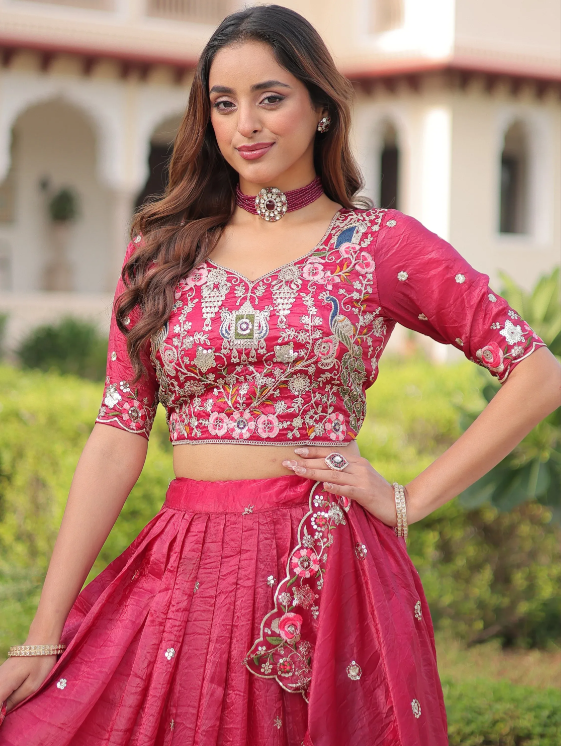
A beautiful lehenga does not always need dramatic decoration to stand out. A well-planned lehenga blouse design can change the entire appearance of an ethnic outfit by adding structure, contrast, or a modern touch. Necklines, sleeves, embroidery, fabrics, and back details all offer simple ways to make traditional clothing feel more personal.
The blouse is often the part of the outfit where styling choices become most noticeable. Even when the skirt remains unchanged, switching between a classic neckline and a contemporary cut can create a completely different impression. This makes blouse selection worth considering carefully before finalizing jewelry, dupatta styling, or footwear.
Start With the Neckline and Overall Shape
The neckline can influence how the upper half of the outfit appears, so it should work naturally with the skirt and dupatta. Round necks offer a traditional appearance, while square, sweetheart, and V-shaped necklines can introduce a more contemporary direction. The choice should also feel comfortable rather than being based only on appearance.
The blouse shape should complement the volume of the lehenga skirt. A fuller skirt can work well with a structured blouse, while softer silhouettes may suit a simpler fitted style. Creating this balance prevents either part of the outfit from appearing disconnected and helps the complete ensemble look more thoughtfully put together.
Sleeves Can Add a Distinctive Touch
Sleeves provide another way to make a traditional outfit feel different without changing its overall character. Short sleeves create a classic festive appearance, while elbow-length styles offer additional coverage and structure. Long sheer sleeves can bring a softer, more contemporary quality to wedding and evening outfits.
The amount of embroidery on the sleeves should also be considered. If the skirt already has heavy decorative work, simpler sleeves can provide visual relief. On a comparatively plain lehenga, embroidered cuffs, textured fabrics, or statement sleeves can become an attractive focal point without making the entire outfit feel overly decorated.
-
Choose sleeve lengths according to personal comfort.
-
Match sleeve detailing with the skirt embroidery.
-
Consider the occasion before selecting dramatic cuts.
-
Keep heavily decorated areas visually balanced.
Using Fabric to Create Contrast
Fabric can quietly change the personality of a blouse. Silk and brocade create a richer traditional appearance, while velvet can add depth to evening clothing. Lightweight georgette, organza, or chiffon can make sleeves and overlays feel softer, especially when paired with a more structured skirt.
Contrast can also come from using a different fabric for the blouse and lehenga. A textured blouse against a smoother skirt can create subtle interest, while matching fabrics produce a more coordinated appearance. These choices allow women to personalize traditional outfits without depending entirely on heavy embroidery or embellishment.
A party wear choli can inspire creating this kind of contrast, especially when the occasion calls for something festive but not excessively bridal. Contemporary cuts, statement sleeves, decorative borders, and carefully chosen fabrics can make the blouse feel suitable for receptions, festive dinners, and other evening celebrations.
Embroidery Placement Can Change the Entire Balance
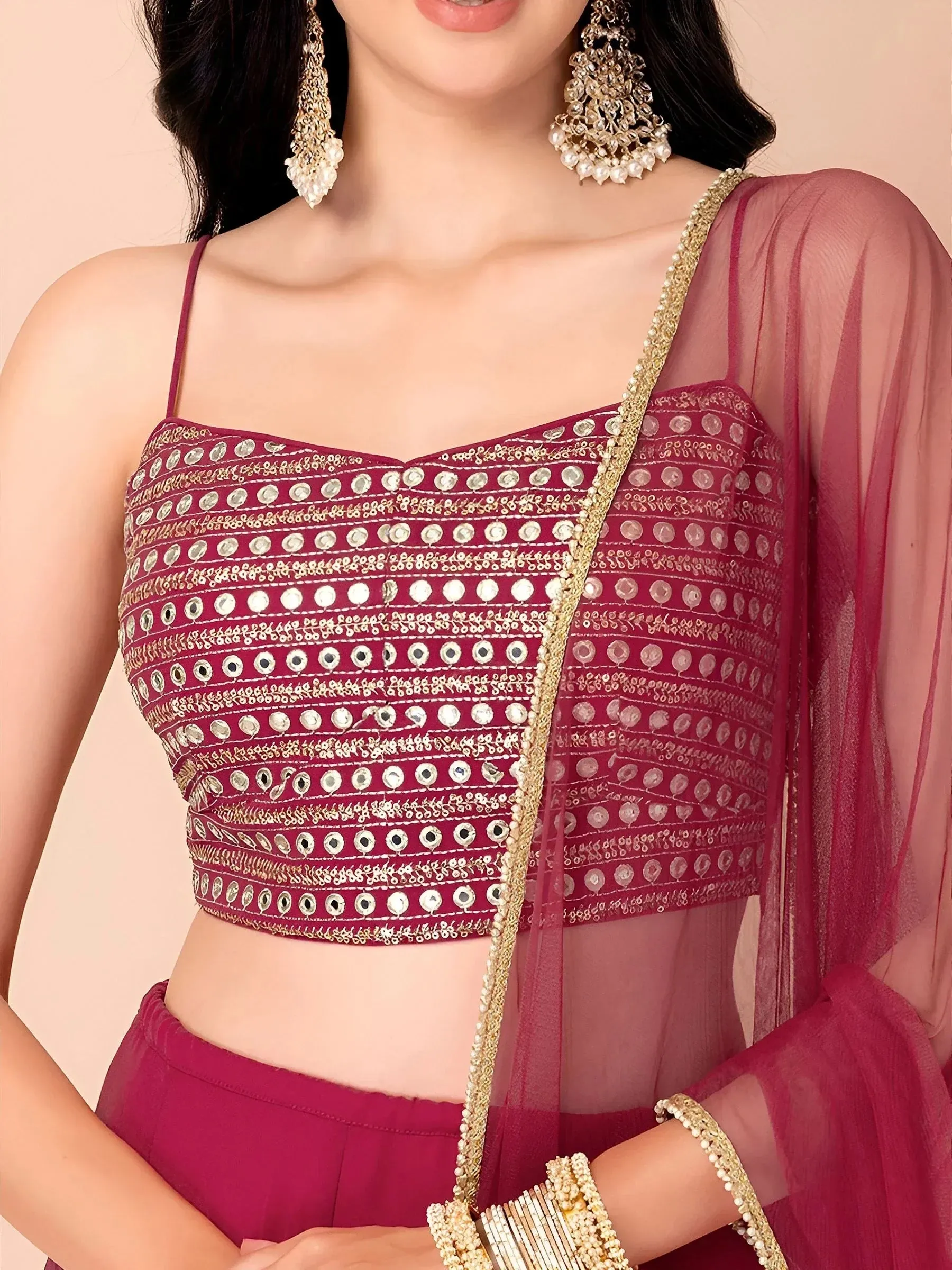
Embroidery does not need to cover every part of the blouse to make it look festive. Concentrated detailing around the neckline, cuffs, or waist can create an elegant focal point, while scattered motifs offer a softer appearance. The placement should work with the skirt instead of making the upper half feel unnecessarily heavy.
Metallic thread, sequins, beads, and delicate threadwork can each create a different mood. Gold and silver details bring a traditional richness, while tone-on-tone embroidery feels more understated. Choosing one dominant decorative style often creates a cleaner appearance than combining several unrelated embellishment techniques.
Styling the Blouse With Jewelry and Dupattas
Jewelry should be selected after considering the blouse neckline and embroidery. Statement earrings can work beautifully with a high or detailed neckline, while a simpler blouse can accommodate a necklace more comfortably. Matching the jewelry with the overall color palette keeps the styling coordinated without making it appear excessive.
The dupatta can also influence how the blouse is presented. A neatly pleated drape allows neckline and sleeve details to remain visible, whereas a relaxed shoulder drape can create a more contemporary appearance. The best option depends on the event, the amount of blouse detailing, and how much of the design you want to highlight.
-
Choose jewelry according to the neckline.
-
Keep accessories lighter with detailed embroidery.
-
Use the dupatta to highlight blouse details.
-
Match metallic accents across the complete outfit.
Choosing a Blouse That Remains Versatile
A thoughtfully designed blouse can make one lehenga useful for more than one celebration. Changing the dupatta, jewelry, or hairstyle can give the same outfit a noticeably different personality, allowing it to work for weddings, receptions, festive dinners, and family functions without feeling the same each time.
The best blouse choices combine attractive design with comfortable construction. Rather than selecting a style only because it looks impressive in photographs, consider how naturally it fits the skirt, how comfortably it allows movement, and whether its detailing suits your existing wardrobe. When these elements work together, the blouse becomes one of the strongest features of the entire ethnic outfit.